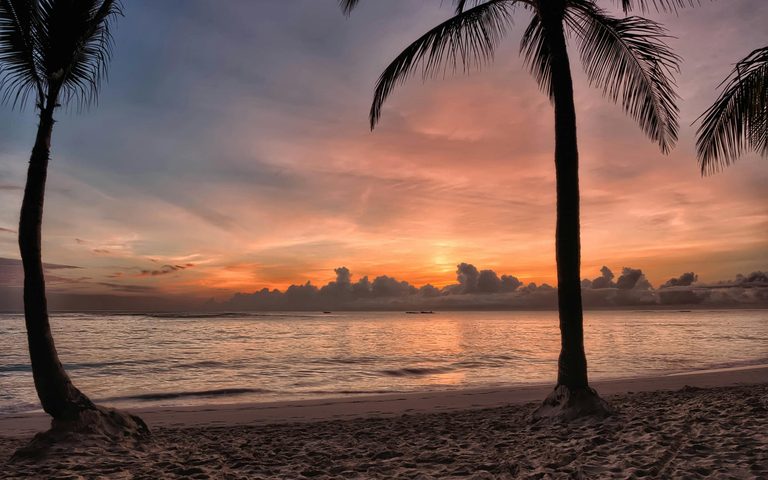
Thanksgiving, Privately — Where Families Go When the Table Moves
Thanksgiving is the shortest planning window in the luxury calendar and the least forgiving: a fixed date, a full household, and flights that price like a holiday because they are one. What separates a good one from a scramble is deciding early whether the table travels or stays.
- A fixed date and a full household make this the least flexible trip of the year.
- Decide the shape first: the four-day dash, the full week, or the bridge into December.
- Short-haul — the Caribbean, Mexico, the Florida Keys — absorbs the four days best.
- The Wednesday out and the Sunday back are the two hardest seats of the year.
- A private aircraft solves the airport, not the scarcity — ramp space binds before aircraft do.
- The house closes before the flights do, so book it first.
- The ritual travels better than most families expect, if a chef is briefed a fortnight ahead.
- Caribbean pros: short flights and the hurricane season's official end on 30 November; and Aspen opens on Thanksgiving Day itself for families who would rather ski.
Why this window is unforgiving
Thanksgiving cannot move. Every family competing for the same four days is doing so against the same fixed date, which is why availability behaves less like a season and more like a single evening at a very good restaurant. Christmas at least spreads across a fortnight, and a family that cannot get the week of the 27th can often take the week before. This does not spread at all: there is one Thursday, and everybody wants it.
The three shapes this trip takes
Almost every version of it is one of three. The four-day dash — out Wednesday, back Sunday — is what most families default to and the hardest to make feel unhurried. The full week, leaving the weekend before, costs two more nights and buys back the entire trip, because the travel days stop eating the holiday. The bridge stretches from Thanksgiving into early December and is the quiet favourite of families whose children are past school age. Deciding which of the three you are doing is the first question, and it changes every answer after it.
Where the four days actually work
Short-haul wins. The Caribbean, the Mexican coast and the Florida Keys leave enough of the window intact to be worth the journey. Riviera Maya and Los Cabos are the two that most often resolve it, because the flying is short from most of the United States and the houses are built for groups. Punta Cana and Turks & Caicos do the same from the east coast, and Barbados holds availability later than any of them, at the cost of a longer flight. Long-haul spends the trip on the plane.
Thanksgiving in the Caribbean: the pros and the cons
It is the most-asked version of the question, and for most families the answer is yes — provided the trade-offs are named before the house is held.
The pros. The flying is short from most of the United States, so four days stay four days. The weather is on your side: the Atlantic hurricane season officially ends on 30 November, and NOAA's August 2026 outlook gave a 75% chance of a below-normal season. And the houses are built for it — staffed villas that seat three generations at one table, with a chef who can hold the ritual intact.
The cons. The Thursday still falls in the last week of the hurricane season, so the change and cancellation terms of the house and the flights deserve a question before anything is paid. The Wednesday out and the Sunday back are the two hardest seats of the year. And the best houses close before the flights do — on the small, fashionable islands, often months ahead.
Where it resolves. Turks & Caicos and Punta Cana are the short hops from the east coast; Barbados and St Martin hold availability latest. If the islands are full, the Mexican coast — Riviera Maya and Los Cabos — solves the same four days.
The two hardest seats of the year
The Wednesday before and the Sunday after are the densest travel days on the American calendar, and they are dense in both directions at once. Families who move a day either side of them — out on Tuesday, back on Monday — buy themselves a materially calmer trip for no more money and often less. If the party includes anyone who finds airports hard, that single change is worth more than any upgrade.
What private aviation actually solves — and what it does not
It solves the airport: the queue, the connection, the bag that does not arrive, the four-hour margin built in to protect a tight transfer. What it does not solve is scarcity. The aircraft, the crew and the landing slot are all working against the same four days as everybody else, and at the smaller Caribbean fields the constraint is the ramp rather than the aeroplane — there is a limit to how many aircraft can park. Booked late, private aviation over Thanksgiving frequently means flying at an hour you would not have chosen. Booked early, it is the single thing that turns four days into four usable days.
When the table travels
The families who do this well move the ritual rather than abandon it: a chef briefed on the dishes that matter, the same table on the same evening, in a house that happens to be somewhere else. That is an arrangement, not a booking. Give it a fortnight — outside the United States the turkey, the cranberries and the tinned pumpkin are a supply question before they are a cooking one, and a good villa chef will tell you honestly which of the three he can find locally and which need to travel in a case. The brief matters more than the menu: say which dish is non-negotiable and who makes it at home.
The multi-generational maths
Three generations is where this trip either works or quietly fails, and the failure is nearly always structural rather than a matter of taste. Grandparents want quiet and a short walk to everything; teenagers want to be unsupervised; small children want a pool and a nap at a fixed hour. One house with separated wings solves this. Two houses solve it better and cost the family the shared table, which was the point. The collections that speak to this directly are Family & Multi-Generational and, when there is something to mark, Celebrations & Milestones.
Why the house closes before the flights do
Seats are a large, elastic inventory; a staffed six-bedroom house on a particular beach is one thing that exists once. Airlines add capacity into Thanksgiving and reprice it; a villa owner does not build another villa. That asymmetry is why the order below is not a preference — reverse it and you are choosing between the houses nobody else wanted.
The order that works
House first, then flights. A multi-generational party that reverses this ends up with seats to a place with nowhere to stay — and unlike a normal trip, there is no second week to fall back on. The house sets the island; the island sets the airport; the airport sets the departure. Every one of those is easier to solve forwards. Only once the house is held does the rest of it — the chef, the boat, the table on the Friday — become a matter of arranging rather than hunting.
If you are reading this late
Then shorten the list rather than the standard. One island, one house shape, and a willingness to travel on the quieter days will still find something worth having. Late decisions are also where Barbados and St Martin earn their place: both hold longer than the small, fashionable islands. The family beach journey is the shape this most often takes, and the Caribbean guide is where to start narrowing it.
Thanksgiving on the snow
For a family that would rather ski than swim, 2026 lines up unusually well. Aspen Mountain and Snowmass are scheduled to open on Thanksgiving Day itself, Thursday 26 November; Jackson Hole opens the next day; and Whistler Blackcomb is targeting 20 November. It is early-season skiing — terrain opens as snow allows — so the chalet matters as much as the mountain. Every resort's dates and the peak weeks of the whole winter are in the 2026–27 ski season guide, and Aspen itself in our Aspen and Rockies guide.
And then, immediately, Christmas
The two windows are five weeks apart and compete for the same houses, so the families who do both decide them together, in one conversation, rather than treating November as settled and December as later. What closes first over the festive fortnight, and in what order, is set out in Christmas & New Year in the Caribbean; the journeys themselves sit in the festive collection.
Starting next year's
September is late but workable. June is comfortable. The families who never seem to struggle with this hold the same week every year and confirm it before they go home — which is also why the best houses rarely reach a public listing at all.
Questions, answered.
Earlier than most families expect. Villa and private aviation availability both tighten from late September, and the date itself cannot flex to absorb a late decision the way a summer trip can. June is comfortable; September is late but workable.
Short-haul destinations — the Caribbean, the Mexican coast, the Florida Keys — because the window is four days and long-haul spends too much of it in transit. Riviera Maya, Los Cabos, Punta Cana and Turks & Caicos resolve it most often; Barbados holds availability later, at the cost of a longer flight.
It fixes the airport, not the scarcity. The aircraft, the crew and the landing slot compete for the same four days as everyone else, and at smaller Caribbean fields the binding constraint is ramp space rather than aircraft. Arranged early it turns four days into four usable ones; arranged late it usually means an hour you would not have chosen.
Yes, and it usually should. A chef briefed a fortnight ahead can hold the ritual intact; what changes is the view from the table, not the table. Outside the United States the turkey, cranberries and tinned pumpkin are a sourcing question — say which dish is non-negotiable and let the chef tell you what has to travel in a case.
The Wednesday before and the Sunday after are the densest travel days of the American year. Moving one day either side — out Tuesday, back Monday — makes the trip materially calmer, and frequently cheaper.
One house with separated wings is usually right for three generations, because it keeps the shared table while giving each group its own rhythm. Splitting across two houses solves the logistics and quietly removes the reason for travelling together.
The pros: short flights from most of the United States, the end of the Atlantic hurricane season on 30 November — NOAA's August 2026 outlook gave a 75% chance of a below-normal season — and staffed villas that seat the whole family at one table. The cons: the Thursday still falls in the season's last week, so check the change terms of the house and flights before paying; the Wednesday and Sunday flights are the scarcest seats of the year; and the best houses close first. Barbados and St Martin hold availability latest.
Thanksgiving 2026 is Thursday 26 November. It is late but not too late: villa and private aviation availability tighten from late September, so shorten the list rather than the standard — one island, one house shape, and a willingness to fly on the quieter days. Barbados and St Martin hold longer than the small, fashionable islands, and flying out on the Tuesday and back on the Monday is calmer and often cheaper.
Yes, in North America. Aspen Mountain and Snowmass are scheduled to open on Thanksgiving Day, 26 November 2026, Jackson Hole opens the next day and Whistler Blackcomb is targeting 20 November. It is early-season skiing, with terrain opening as snow allows, so we choose the chalet as carefully as the mountain. The Alps do not open until December.
Short-haul places, because the window is four days: the Caribbean, the Mexican coast and the Florida Keys. Riviera Maya and Los Cabos resolve it most often from most of the United States, Turks & Caicos and Punta Cana are the short hops from the east coast, and Barbados and St Martin hold availability latest. For a family that would rather ski, Aspen Mountain and Snowmass open on Thanksgiving Day itself in 2026, and Jackson Hole the next day.
A Thanksgiving trip takes one of three shapes, and choosing it is the first decision because it changes every answer after it. The four-day dash, out Wednesday and back Sunday, is the default and the hardest to make feel unhurried. The full week, leaving the weekend before, costs two more nights and buys back the entire trip, because the travel days stop eating the holiday. The bridge, from Thanksgiving into early December, is the quiet favourite of families whose children are past school age.
For Thanksgiving the house comes first because it is the scarcer thing. Seats are a large, elastic inventory that airlines add to and reprice; a staffed six-bedroom house on a particular beach exists only once. A multi-generational party that books flights first can end up with seats to a place with nowhere to stay, and there is no second week to fall back on. The house sets the island, the island sets the airport, and the airport sets the departure.
Yes. Thanksgiving and Christmas are five weeks apart and compete for the same houses, so families who travel for both decide them together, in one conversation, rather than treating November as settled and December as later. The difference is flexibility: Christmas spreads across a fortnight, so a family that cannot get the week of the 27th can often take the week before, while Thanksgiving has one Thursday that everybody wants.
Thanksgiving itself is one day, Thursday 26 November 2026, but most families plan around four: out on the Wednesday, back on the Sunday. That four-day dash is the hardest version to make feel unhurried. A full week, leaving the weekend before, costs two more nights and gives back the whole trip, and a bridge into early December suits families whose children are past school age. Flying out on the Tuesday and back on the Monday also avoids the two densest travel days of the year.
Tell a private advisor how you like to travel — no quotes, no obligation.
Speak With a Luxury Travel AdvisorA real person answers: an in-house luxury travel advisor, in English or Spanish. The first conversation is complimentary.