How Far in Advance Should You Book a Luxury International Trip?
As a rule, book a luxury international trip 6–12 months in advance. Most journeys are comfortable at 3–6 months, but peak-season travel, safaris, festive and holiday dates, and marquee events like the 2026 FIFA World Cup should be secured 12 months or more ahead — the best villas, suites and experiences are limited and go first.
- Six to twelve months covers most luxury international trips; twelve to eighteen applies to fixed-inventory travel and three to six is enough for well-connected capitals.
- The booking window is set by how many keys, tents or cabins exist, not by how expensive the trip is.
- The best safari camps in dry and migration season fill ten to twelve months out, and conversations for peak season should start nine to twelve months ahead.
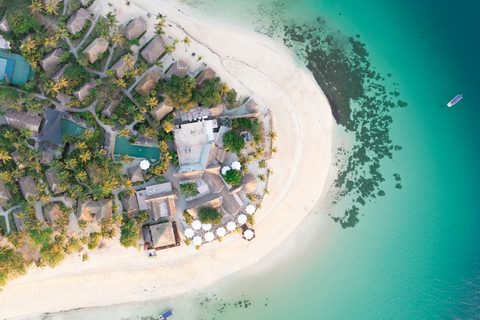
- Maldives and French Polynesia both want six to twelve months, with six to nine the working minimum for Maldives dry season from December to April.
- Caribbean festive weeks need twelve to eighteen months — one broker reported 60% of festive villas already booked for the 2026 holidays as of July.
- Autumn is no longer the flexible season: Virtuoso reported autumn 2026 bookings up 59% and sales up 69%, with European autumn bookings up 49% against rate rises above 7%.
- Book in scarcity order — villa, camp, ship or guide first, then international flights, then city hotels and restaurants.
How far in advance should you book a luxury international trip?
Six to twelve months for most international journeys, twelve to eighteen for the scarce ones, three to six when the destination is a well-connected city. The window is set by supply, not by prestige. A 300-room capital hotel can almost always find you a room; a camp with nine tents, a villa with one August, or a ship with a fixed cabin count cannot. Count the beds before you count the months.
Why has the booking window moved out this year?
Because demand at the top of the market is growing faster than supply. Across the Virtuoso network, forward bookings one to two years out are running roughly 50% ahead of the same point last year, and 42% of luxury travellers report booking earlier specifically to secure preferred options. Bookings at hotels above US$1,500 a night are up 37%, more than twice the growth rate of cheaper rooms. Earlier is no longer cautious; it is standard.
Which trips need twelve to eighteen months?
Trips where the inventory is physically fixed and cannot be expanded.
- Festive-week Caribbean villas. Christmas, New Year and Easter across St Barts, Anguilla, Barbados and Turks & Caicos.
- Expedition sailings. A ship has a set number of suites and no way to add one.
- The best camps in migration season. Top properties fill ten to twelve months out.
- Fixed-date milestones. A date that cannot move removes every fallback you would otherwise have.
How early should you book a safari in migration season?
Ten to twelve months for the best camps in dry season and migration, and start the conversation nine to twelve months out even for peak-season travel generally. The constraint is not the country; it is that a camp with nine tents sells out on a specific week and cannot build a tenth. A private safari compounds this, because vehicle, guide and camp all have to align on the same dates. Read the safari pages before you fix a month.
When should you book the Maldives or French Polynesia?
Six to twelve months for both, and treat the shorter end as the minimum rather than the target. For Maldives dry-season travel between December and April, six to nine months is the working benchmark and overwater villas at top resorts go first. For French Polynesia's high season the rule is blunter: at less than six to twelve months, flights are gone, accommodation is full and rates are at their worst. Bora Bora private motu are the first casualties.
When do Caribbean festive villas actually sell out?
Earlier than most people believe — one villa broker reported 60% of Caribbean festive villas already booked for the 2026 holidays as of July, with families confirming earlier than in previous years. For peak January to March, six to nine months is comfortable. For Christmas and New Year weeks, work back twelve to eighteen months. If you are reading this in late August for December, you are looking at what is left, not what is best.
Which trips are comfortable at six to nine months?
European and Mediterranean summers, high-season Caribbean outside the festive weeks, and most first-visit itineraries to a single country. At this range you will still get strong properties and good guides; what you may lose is the specific room category, the specific villa, or the guide everyone asks for. That is usually an acceptable trade, and an advisor should tell you plainly which of the three you are risking.
Which trips still work at three to six months?
City stays in well-connected capitals, shoulder-season travel outside the current demand concentration, and anywhere the accommodation is high-density. A capital-city hotel rarely needs more than three to six months. The median lead time for luxury villa rentals runs around 147 days — roughly five months — so a spring enquiry for summer dates is normal rather than early. Short notice is a constraint, not a disqualification.
Does the shift to autumn change your timing?
Yes — autumn is no longer the flexible season. Virtuoso reported autumn 2026 bookings up 59% and sales up 69%, with September sales up 77% and bookings up 55%. European autumn bookings rose 49% even as rates climbed more than 7%. Treat September and October in Italy, France and the Mediterranean with summer lead times. The genuine slack has moved to late winter and to less concentrated destinations.
What sets the window: the destination or the property?
The property, almost always. Japan in cherry-blossom season and Japan in November are different bookings entirely, and a private island with eleven villas behaves like a ship regardless of which ocean it sits in. Ask one question of any itinerary: how many keys does this property have? Under about twenty, assume a year. Over two hundred, assume months.
What should you book first?
Book in scarcity order, not chronological order. Secure the villa, the camp, the ship or the guide first, because those cannot be recreated. Then the international flights. Then city hotels and restaurants, which stay available longest. Travellers who book flights first because flights feel like the commitment routinely end up building the trip around the wrong fixed point.
How do deposits and cancellation terms change with lead time?
Booking early usually means committing money early, and the terms tighten as the inventory gets scarcer. Villas and expedition ships commonly take substantial non-refundable deposits and cancel on schedules unlike a hotel's. That trade — earlier certainty for reduced flexibility — is the real cost of a long lead time, and it should be written into your proposal component by component before you pay anything.
What if you have already left it late?
Ask anyway, and expect a straight answer. Close to departure, relationships sometimes release what the public inventory says is gone, and re-sequencing the itinerary — shifting a week, swapping a region, changing the order of countries — often recovers more than chasing one sold-out property. What no advisor can do is manufacture a tent in a nine-tent camp. Forest charges a US$250 planning fee on every engagement, and part of what it buys is being told early that the dates do not work.
Questions, answered.
Six to twelve months covers most journeys. Push to twelve or eighteen months for fixed-inventory travel — festive Caribbean villas, expedition sailings, top safari camps in migration season, and any date that cannot move. Three to six months is sufficient for well-connected capital cities and high-density hotels.
Ten to twelve months for the best camps in dry season and migration, and start the conversation nine to twelve months out for peak-season travel generally. A camp with nine tents sells out on a specific week and cannot add a tenth; a private safari tightens this further, because vehicle, guide and camp must align on the same dates.
Six to twelve months for both. For Maldives dry-season travel from December to April, six to nine months is the working benchmark, and overwater villas at leading resorts sell first. For French Polynesia's high season, under six to twelve months typically means sold-out flights, full accommodation and peak rates.
For this year, probably for the best villas — one broker reported 60% of Caribbean festive villas already booked for the 2026 holidays as of July. Festive weeks in St Barts, Anguilla, Barbados and Turks & Caicos generally need twelve to eighteen months. January to March high season is comfortable at six to nine months.
Yes. Virtuoso reported autumn 2026 bookings up 59% and sales up 69%, with September sales up 77% and bookings up 55%. European autumn bookings rose 49% even as rates climbed more than 7%. September and October in Italy, France and the Mediterranean now need summer-length lead times.
Book in scarcity order rather than chronological order. Secure the villa, camp, ship or specific guide first, because those cannot be recreated at any price. International flights come second. City hotels and restaurant reservations stay available longest and should be booked last.
Tell a private advisor how you like to travel — no quotes, no obligation.
Begin Your Private Consultation