What does the Serengeti add to the bill before the camp does?
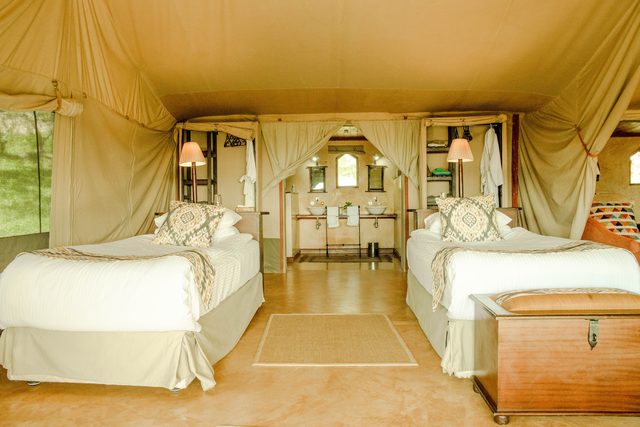
US$70.80 per adult per 24 hours in low season and US$82.60 in peak, plus 18% VAT, charged per person per day and separately from your bed. The Ngorongoro Conservation Area charges the same US$70.80 per adult, and descending to the crater floor costs a further US$295 per vehicle. Two people on a ten-night northern circuit are therefore carrying well over US$1,500 in fees before a single night is paid for, which is part of why Serengeti camps quote from US$1,800 per person per night in season, as our safari guide sets out.
Which month puts the herds where?
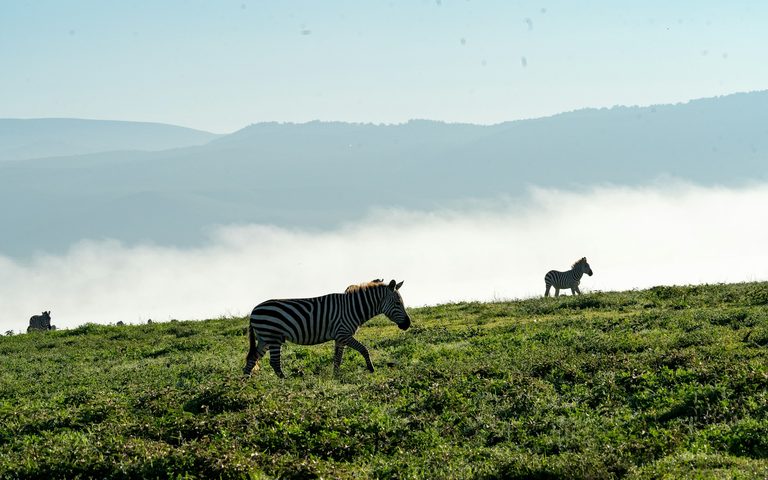
February for the calving, August for the crossings, June for the western corridor. Calving peaks in February around Ndutu at roughly 8,000 wildebeest calves a day, which is the predator season and the quietest time in camp; the columns push north through the western corridor in June; the Mara River crossings peak in August and the southbound return runs in late October. The Ngorongoro Crater holds game in every month, which makes it the reliable half of any itinerary whatever your dates.
How do the crater's own rules shape the day?
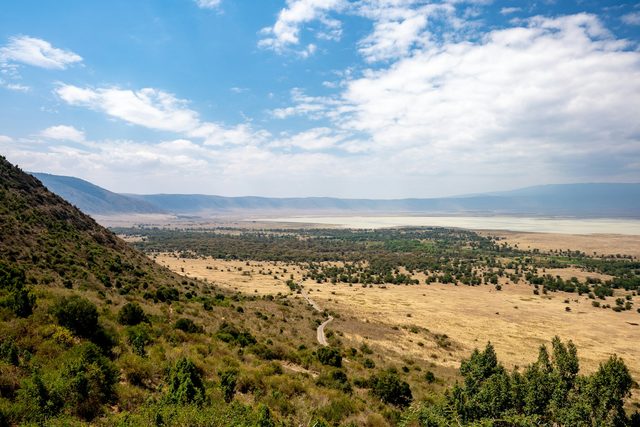
They cap it. Each vehicle may spend up to six hours on the crater floor per drive, and the access roads are one-way — you descend by Seneto on the western side and climb out by Lerai, which means the route is decided for you and cannot be improvised. Since the floor fills with vehicles by mid-morning, the six hours are only worth having if they start at opening, and that means staying on the rim so the descent is twenty minutes rather than two hours from Karatu.
What does the paperwork and the packing look like?
A US$100 multiple-entry e-visa for US passports under Tanzania's reciprocity rule, valid twelve months with stays of up to 90 days, and no visas issued at the border since January 2025 — so it has to be done before departure, not on landing. The bush flights allow around 20 kg per person including hand luggage and all camera gear, in soft bags no larger than 25 × 30 × 62 cm. That limit, not the camp, is what decides your lens, and a photographic safari is planned from it backwards.
Is a private vehicle worth it here?
Yes, and in Tanzania it is unusually cheap for what it changes. The supplement runs from roughly US$250 per vehicle per day, which buys you the departure time, the right to sit with a leopard for an hour, and a row of your own for the camera. It is the difference between watching the sighting and photographing it. On the safaris we arrange it is the default rather than the upgrade, and our safari journeys are costed that way from the start.
Who should choose Kenya instead?
Anyone who wants to walk. Tanzania's national parks do not permit night drives or off-road driving to reach a sighting, and walking is limited to ranger-led walks in parks such as Tarangire and the Serengeti; Kenya's private conservancies do, and they cap vehicles per sighting as well. Tanzania is also the wrong first safari on six nights — the internal flying starts to eat the trip below seven — and the wrong choice for children under six at most camps. We have written the comparison out in full rather than pretend there is one answer.