What are the fees here, and why are they about to change?
Unusually low, and under review. Non-residents pay P270, roughly US$20, per person per day at Moremi and Chobe, against US$70.80 in the Serengeti and up to US$200 a day in the Maasai Mara National Reserve. A rise to P500 was due on 1 April 2026 and the Ministry of Environment and Tourism postponed it on 31 March after industry consultation, with no new date announced — it is delayed, not cancelled, so a 2027 quote should assume the higher number. A US$30 tourism development levy is collected on arrival.
Where is the water in the month you can travel?
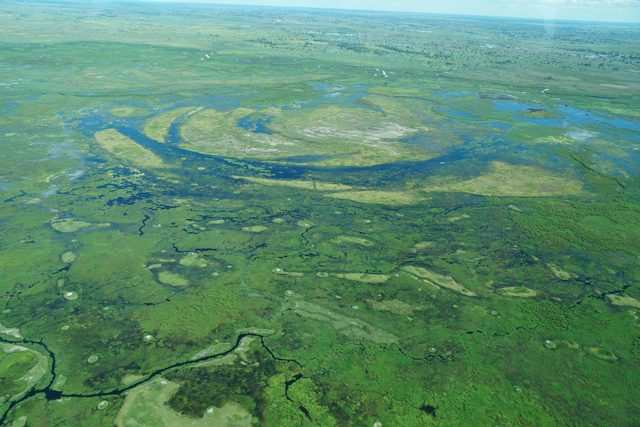
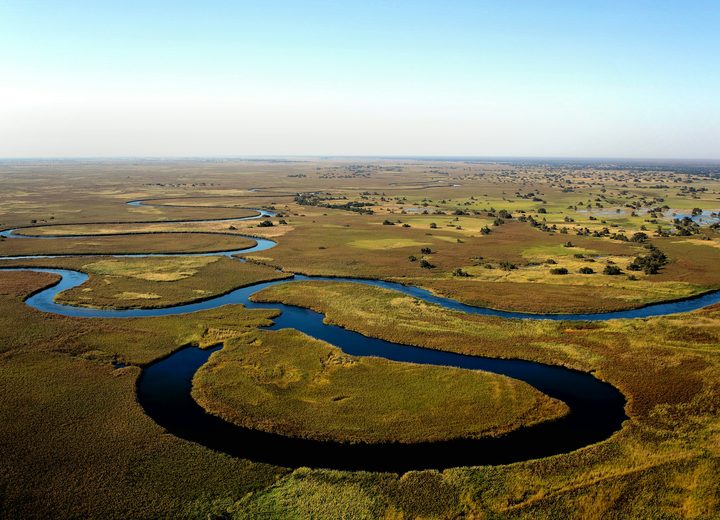
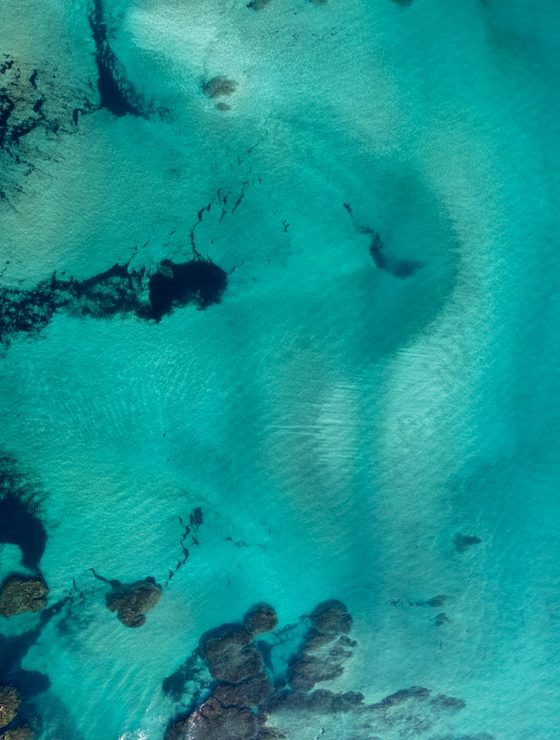
Arriving from March, peaking July and August. The floodwaters that fill the Okavango fell as rain in the Angolan highlands and reach the delta between March and June, peaking in July and August, when open water covers more than 7,000 km² — about 2,700 square miles — while the land around it is at its driest. September and October are hotter and the best months for predators. November to March is the green season, with rates 30–50% below peak, dramatic skies and harder going, as our safari guide explains.
What does the light aircraft decide?
Nearly everything, in a country with no roads to most camps. The allowance is around 20 kg per person including hand luggage and all camera gear, in soft bags no larger than 25 × 30 × 62 cm, and some operators hold it at 15 kg; passenger weights are declared in advance because the aircraft are small enough for it to matter. A private charter or a helicopter removes the constraint and buys direct routing, which is the honest reason a photographic safari in the delta costs what it does.
Water camp or land camp — do you need both?
Both, and in that order if the flood is high. A water camp gives you the mokoro and the motorboat channels; a land camp in Linyanti or the Khwai concessions gives you the predators and the walking. Seven to nine nights across two or three camps is the shape that works, and Chobe adds elephants in numbers nowhere else matches. Below six nights the light-aircraft legs take too large a share of the trip — the same arithmetic that applies in every safari country, only sharper here.
Which camps, and which one for what?
The delta's best camps are small enough that the choice of camp is the choice of trip. These are the ones we build around, by what each does best.
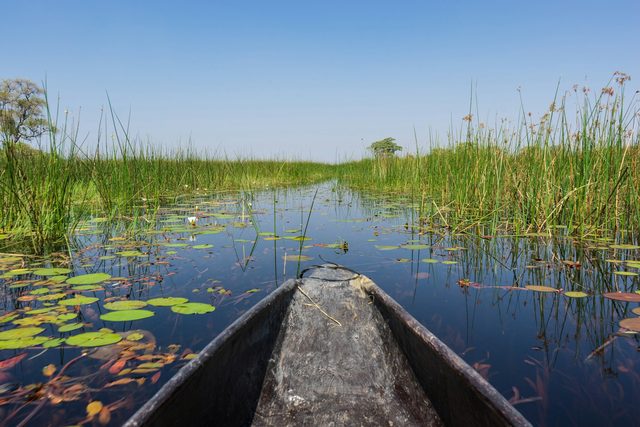
- Water and the flood. Jao, in a private concession in the western delta: nine suites, two of them villas with their own plunge pools — the mokoro and motorboat camp at its most refined. Xigera, in western Moremi: twelve suites, one a family suite, and an art collection that is a reason to stay on its own.
- Water and land in one camp. Vumbura Plains, on a 60,000-hectare concession in the far north of the delta: fourteen rooms in two camps, each with a plunge pool, and land and water activities all year — the single camp that comes closest to doing both.
- The big game. Mombo, on Chief's Island inside the Moremi Game Reserve: nine tents, rebuilt in 2018–19, in the area with the delta's densest predator viewing.
- Predators and privacy. Duba Plains, in the north-western delta: five tents and a separate two-bedroom suite with its own vehicle, guide and chef, known for lion and buffalo. Zarafa, in the 320,000-acre Selinda Reserve between the delta and the Linyanti: four tented suites, co-owned by the filmmakers Dereck and Beverly Joubert. DumaTau, on the Linyanti waterfront, for elephants and the dry-season predators.
- Chobe. Belmond Savute Elephant Lodge: twelve tents on the Savute Channel. Chobe Game Lodge: the only permanent lodge inside the national park on the Chobe River itself.
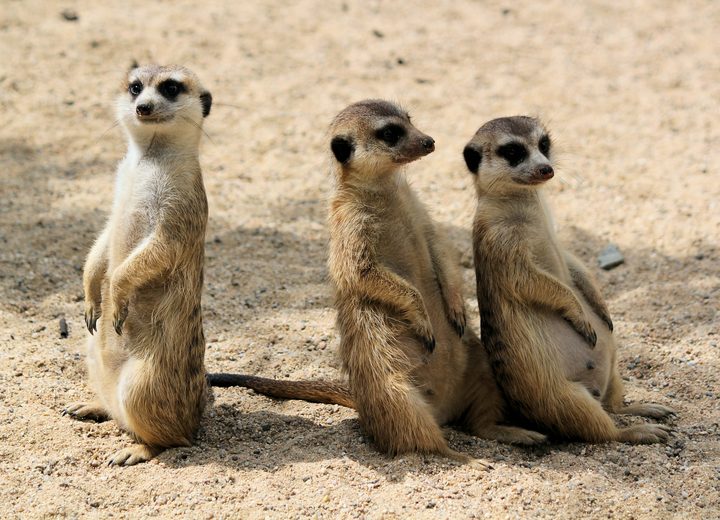
- The Kalahari. Jack's Camp, on the Makgadikgadi Pans: rebuilt in 2020, with habituated meerkats, walks with San guides and quad bikes on the salt pan in the dry months — and children of any age.
Who should not book the Okavango?
A first-time safari traveller with a Big Five checklist. Rhino are scarce in the delta and lion sightings, while excellent, are not the daily near-certainty of Sabi Sand. Families should ask camp by camp rather than assume: water activities, unfenced camps and aircraft weight limits all constrain who can come, and some camps simply will not take children. And anyone for whom the price is the point should know that Botswana is the most expensive safari on the continent by policy, not by accident — you are buying the absence of other people.
What should the trip end with?
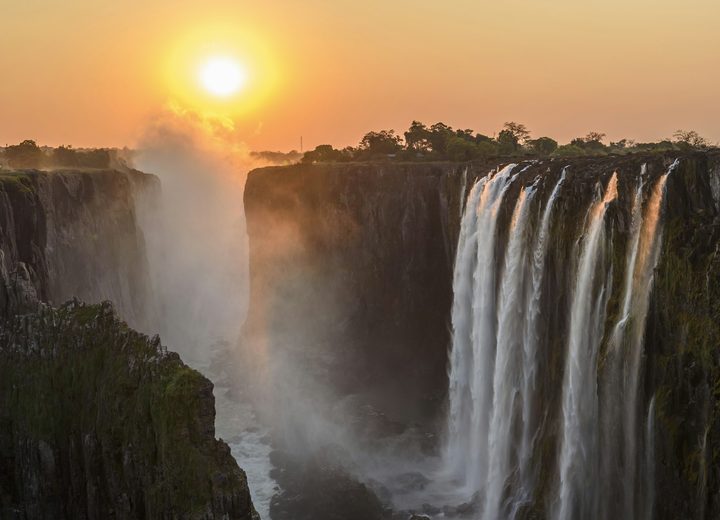
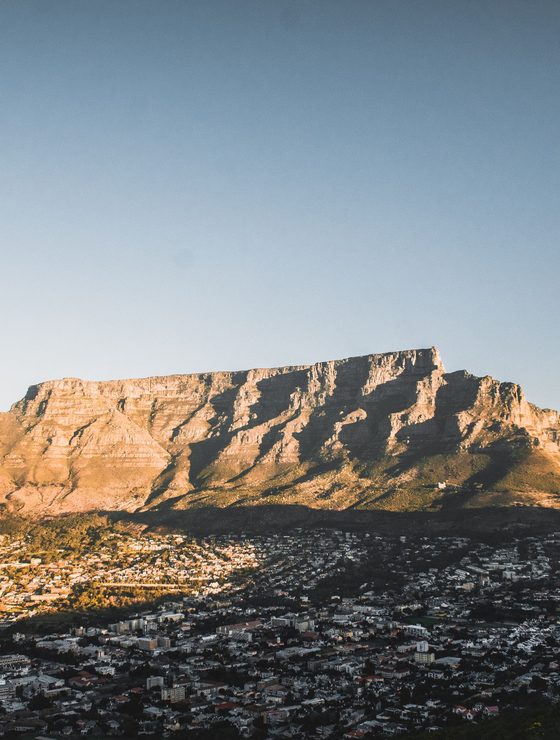
Victoria Falls, two nights, a short flight from the delta. It is the natural close because it asks nothing of you after camps that start before dawn, and because the falls are at their fullest between roughly February and May, which usefully inverts the delta's own calendar. Anyone wanting a longer decompression flies on to the Indian Ocean instead — Mozambique's islands or Cape Town and the winelands, which is how our safari journeys normally shape a Southern African trip.