Photographic Safari
Specialist guides, hides and the light that defines the savannah. A private, tailored journey of 9-12 days in Safaris, designed end to end by a Forest Travel advisor — with Virtuoso privileges at the finest luxury hotels, from US$17,500 per traveler.
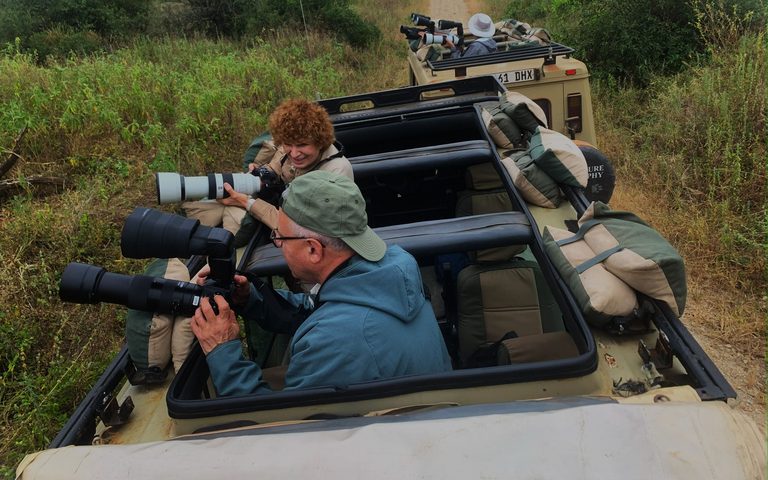
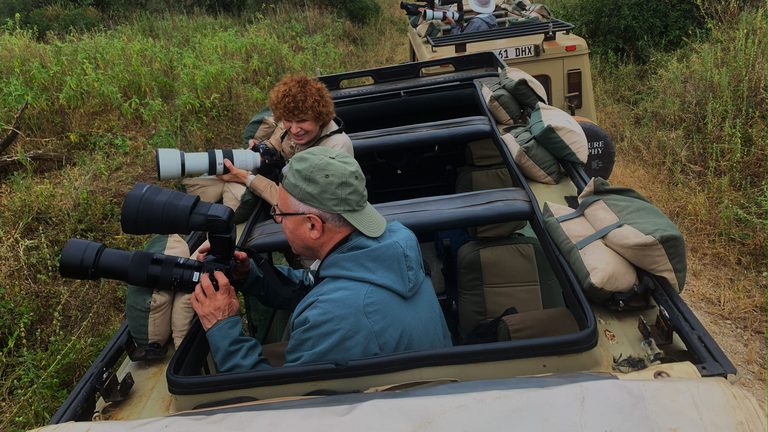
- A photographic safari is defined by seat count: a 4x4 built for six carries three, and one built for four carries two, so every guest has a full row and both sides of the vehicle.
- Photographic vehicles carry bean bags in every row and roof-rail clamps for gimbal heads, which counterbalance a long lens so it tracks under one finger.
- Mashatu's Matabole hide in Botswana is a shipping container sunk at an elephant waterhole, putting your camera at ground level; it opened in 2012 and set the regional pattern.
- Zimanga in South Africa runs nine hides, including the Umgodi and Tamboti overnight hides — in at 3pm, out at 8am, four people maximum.
- Mara river crossings peak in August and recur on the southbound return in late October; calving peaks in February at roughly 8,000 wildebeest calves a day in Ndutu.
- Bush flights are the real kit limit: Wilderness Air Botswana allows 20 kg per person including hand luggage and all camera gear, in soft bags no larger than 25 x 30 x 62 cm.
- Book migration and peak dates 12 to 18 months out, because a camp's two or three photographic vehicles sell out before its rooms do.
What separates a photographic safari from an excellent ordinary one?
The seat count in the vehicle, not the thread count in the camp. On a standard luxury game drive six guests share three rows and half your frames are shot past someone's shoulder. On a photographic safari a 4x4 built for six carries three and one built for four carries two, so every guest has a full row and can shoot from either side without asking anyone to move. Everything else — the guide, the hides, the hours — follows from that decision. See how we build a safari.
Why does a row of your own change the picture?
Because a wildlife frame is decided by angle and steadiness, and both need room. With your own row you swap sides as the animal moves rather than shooting into the light because that is the window you were given. Photographic vehicles carry bean bags in every row — the East African standard, sized for door frames and roof rails — and clamps on the roof rails for gimbal heads, which counterbalance a long lens so it pivots under one finger instead of being wrestled.
What does a photographic guide do that a superb general guide does not?
Positions the vehicle for the light and the background, not for the sighting. A general guide gets you to the leopard; a photographic guide gets you to the leopard with the sun behind you and a clean bank instead of a Land Cruiser in the frame, then stays while everyone else moves on. Some operations run a photographic host alongside the driver-guide and cap photographic groups at three, with coaching in the field and again over the files that evening.
Is a hide worth giving up a game drive for?
Yes, once, because a hide is the only way to shoot a large mammal from below its eye line. Mashatu's Matabole hide in Botswana is a shipping container sunk into the ground at a waterhole where elephant paths converge; your head and camera sit at ground level, and elephants come close enough that photographers swap the telephoto for a wide angle. It opened in 2012 and set the pattern for underground hides across the region. Botswana.
Would you spend a night in one?
It is the single most productive fifteen hours available to a wildlife photographer. Zimanga in KwaZulu-Natal runs nine hides, two of them — Umgodi and Tamboti — built as overnight hides for large mammals: in at about 3pm, out at 8am, four people maximum, with bunk beds, a kitchen and a bathroom. Its Lagoon hide is reached down a 30-metre screened pipe just 1.5 metres across, so the birds never see you arrive. South Africa is where hide photography is most developed.
Should you pay for a private vehicle?
If photography is the point, this is the one upgrade that changes every frame, and you should get the terms in writing. In Tanzania a 4x4 with a pop-up roof and guide runs from roughly US$250 per vehicle per day at operator level; camps in Botswana and Kenya's conservancies instead quote a private-vehicle supplement per vehicle per day. Ask for two things before you commit: the supplement, and the maximum number of guests the camp will put in that vehicle.
Water or plains — which country for which picture?
Choose the medium first and the country follows. Botswana is water: the Okavango's floodwaters arrive between March and June and peak in July and August, when open water covers more than 7,000 km² and mokoro and boat work run cleanly from June to October — reflections, low angles, painterly light. Kenya's Mara and Tanzania's Serengeti are plains: herds, horizons and action. South Africa is hides, and the lowest entry cost of the four.
Which month, if the migration is the point?
Late July and August for the river crossings, February for the calving. Crossings in the Mara are sporadic in July as the herds test the water, peak through August when the bulk of the herd is in the north, fragment in September, and come again on the return south in the last two weeks of October into early November. Calving runs late January to March in Ndutu and the southern Serengeti, peaking in February at roughly 8,000 calves a day — which is why the predator work is best then.
What does a photographic safari cost per night?
Plan on from US$1,200 per person per night, all-inclusive, before the photographic layer:
- Serengeti migration camps — from US$1,800 per person per night in season; ultra-luxury properties reach US$4,500.
- Botswana — from US$800 per person per night in the Okavango.
- South Africa — from about US$600 per person per night.
- Peak season — 30–50% above green-season rates for the same room.
- Serengeti park fees, 2026 — US$70.80 per adult per day low season, US$82.60 peak, charged on top.
What a private safari actually includes.
What kit survives the bush flight?
Less than you want to bring, and the limit is enforced at the airstrip. Wilderness Air in Botswana allows 20 kg per person including hand luggage and all camera gear, in soft bags no larger than 25 x 30 x 62 cm; some operators cap at 15 kg, and light aircraft have no overhead bins, so your carry-on sits on your lap. The working answer is two bodies and two zooms: a 100–400, 100–500 or 200–600 on one, a 24–70 or 16–35 on the other, and no lens changes in the dust.
Do you need to own the gear?
No — some photographic operators lend it. Pangolin in Botswana supplies a Canon R6 Mark II with an RF 100–500mm free of charge for the duration of a stay, which makes a photographic safari testable before you spend on a long lens. Its Chobe photo boats show what purpose-built means: eight seats, each with an articulated arm and a camera gimbal that rotates through 360 degrees, on a low hull that puts you at the animal's eye level from the water.
How much of the day is actually shooting?
Two long sessions, and the rest of the day is built to protect them. You leave before first light and work until the light goes hard, come back to download, cull and edit through the middle of the day, and go out again for the last hours — the two windows when the savannah has colour and the animals are moving. Camps that run photographic guests properly move breakfast and dinner to fit, rather than the other way round.
How far ahead do you have to commit?
Twelve to eighteen months for migration season and peak dates. The constraint is not beds, it is vehicles: a camp with eight rooms may hold only two or three photographic vehicles, and those go before the rooms do. Add the peak-season premium of 30–50% and the arithmetic argues for green-season dates in the same camps if your subject is not the migration. How release calendars actually work.
Where does an advisor change the outcome?
In the three places a website cannot show you: which camps will genuinely hold a vehicle to two guests, which guides on a camp's roster are photographers rather than naturalists who tolerate cameras, and which hide is worth the night you give up for it. That is a relationship, not a booking. See our safari journeys, how this works with children — a photographic vehicle with a row per guest is not a family vehicle — and what 2026 is doing to availability.
Questions, answered.
The vehicle configuration and the guide. A photographic vehicle carries half the standard load — three guests in a 4x4 built for six, two in one built for four — so each guest has a full row, bean bags on the door frames and roof rails, and clamps for a gimbal head. The guide positions for light and background rather than for the sighting, and stays after other vehicles leave.
If photography is the point, yes — it is the upgrade that affects every frame. In Tanzania a 4x4 with a pop-up roof and guide runs from roughly US$250 per vehicle per day at operator level; camps in Botswana and Kenya's conservancies quote a private-vehicle supplement per vehicle per day instead. Ask for the supplement and the maximum guest count in writing before booking.
Late July and August for Mara river crossings, which peak in August and recur on the southbound return in the last two weeks of October into early November. February for the calving in Ndutu and the southern Serengeti, when roughly 8,000 wildebeest calves are born daily and predator activity is at its highest. June to August for the Okavango at peak flood.
Two bodies and two zooms — a 100–400, 100–500 or 200–600 on one, a 24–70 or 16–35 on the other — so you never change lenses in dust. Wilderness Air in Botswana allows 20 kg per person including hand luggage and all camera gear, in soft bags no larger than 25 x 30 x 62 cm; some operators cap at 15 kg. Pangolin lends a Canon R6 Mark II with a 100–500mm free of charge.
Yes, because they are the only way to shoot a large mammal from below its eye line. Mashatu's Matabole hide is sunk into the ground at an elephant waterhole so camera and head sit at ground level. Zimanga's Umgodi and Tamboti overnight hides take four people from about 3pm to 8am, with bunk beds, a kitchen and a bathroom.
Plan on from US$1,200 per person per night all-inclusive: from US$1,800 at Serengeti migration camps in season, from US$800 in the Okavango, from about US$600 in South Africa, with Serengeti park fees of US$70.80–82.60 per adult per day on top. Peak season runs 30–50% above green season, and migration dates should be held 12 to 18 months out.
Safaris
See the collection →Tell a private advisor how you like to travel — no quotes, no obligation.
Begin Your Private Consultation